The last post I will dedicate to this topic. For those of you who have been following along, I'm sure it's starting to get old reading about videos, videogames, art, what's art?, what's not art?, Roger Ebert, etc.
At this point, most of the arguments/sides/perspectives/insight has been hashed out and rehashed. Sure, we could dive into it further.. sure, we could keep looking for more quotes by famous people (or bloggers, or regular people).. sure, we could find some new way to look at it, or think about it that hasn't been added to the conversation on this blog yet..
But I worry that the topic at hand might start getting mundane for those of you who aren't quite as "into" it. So, it's okay. We'll move on. Plus, there is much more I want to share and discuss.
My next post will be about value-priced games. "Reviews for the Recession". Have you ever bought a game because of the ads you saw, the great reviews you read, or awesome ads you've seen? Then you beat it in a week and realize you spent $60 bucks for about 10 hours of fun. Or, just in general, do you feel like games have plain become too much of a financial investment to keep up with? Next time, I'll share the solution I've come up with.
I digress. Let's get started so we can finally finish this up.
---
 |
| 8-bit wall art!! |
Smuts.
Mr. Smuts that is, Aaron Smuts to be exact, wrote a very thorough and intelligent paper exploring and defining video games as art. It makes no reference to Ebert's post (or anyone else's comments for that matter), but instead provides evidence through a study of the history of art. As well as analyzing how videogames compare to other debated and accepted forms of art.
The paper was published in the journal, Contemporary Aesthetics 3, in November of 2005.
Here's the link.
It's a long read, so I'll try my best to break it down through a few select excerpts:
"Despite the cultural prominence of video games and technology-based art, philosophical aesthetics has completely ignored the area. Scholars in other disciplines, such as film, have taken the lead in the conceptual debate. This is unfortunate, since seldom are there questions in the philosophy of art that have direct, real world consequences. Philosophical inattention to video games has a de facto effect on the multi-billion dollar industry by inadvertently making hasty censorship attempts easier. The fact that philosophers have not raised the question of whether video games can be art lends credence to the assumption that they are not.
...Unlike chess and sport, the art is not only in the playing; as in film, the type of art that should concern us in video games involves not the playingbut the making.
...Video game technology has allowed artists to experiment with solutions to the problem of how to make an interactive movie: Video games are the first concreative mass art.
...In The Philosophy of Human Movement, David Best argues that there is a crucial difference between sports and art: Sports fail to meet basic representational criteria. Putting the contrast nicely, Best says that 'whereas sport can be the subject of art, art could not be the subject of sport. Indeed, the very notion of a subject of sport makes no sense.' In this way, the distinction between sports and video games is profound. As such, video games are much more plausible candidates for art than are aesthetic sports or chess.
...I expect that in the course of time current video games may seem as artistically insignificant as Lumière actualités, with little more than historical significance. Perhaps it is a trivial feat, but several recent games have reached levels of excellence that exceed the majority of popular cinema. The potential of the medium seems clear: good if not great video game art is in the near future."Let me begin by saying that there's just no way to do the paper justice by pasting a few quotes here and there. The evidence he provides is rather in-depth, and for that, you must read the whole thing. But these lines summed up his argument.
Smuts' paper contributes by providing a constructive study into the history of art, the process by which philosophers determine art, and how that all relates to video games. This paper was the only "formal" piece of writing I found.
His ideas are pretty complex and difficult to summarize. But basically, he took three games (Max Payne, Halo, and Splinter Cell) and applied them against theories of art. Also, he compares video games to chess and sports, and compares how they stack up as candidates of art.
Finally, he gives a history of the debate dating back to 2000.
I also found this from Smuts, Film Theory Meets Video Games: An Analysis of the Issues and Methodologies in _ScreenPlay_. _ScreenPlay_ is the first collection of essays devoted to exploring the relationship between cinema and video games.
---

Smuts' paper has been widely cited and referenced in discussions on the web. I found it encouraging that I found several debates mentioning Smuts' paper took place on PhilPapers, a site dedicated to research in philosophy.
Also, I found this article on Kotaku by Grant Tavinor. This will be the last piece I cover. Here are some parts of it:
"A number of recent philosophical papers and books, including those by Aaron Smuts, Dominic Lopes, and my own book The Art of Videogames, have taken up the task of explaining video games in terms of the arts.
...The basic problem is clear: in asking whether video games are presently art (or could be in the future) we are asking whether they do or could properly sit within the category of the arts. The obvious question thus facing us is how we should we categorize or define art.
...Almost all such arguments show little or no awareness of the current state of the definition of art debate, at most referring in a very basic way to the ideas of Plato or perhaps Wittgenstein; or more usually, what the discussant personally takes to be the nature of art.
...But let's look at what the experts have to say on definitions of art. In fact the philosophical debate about the nature of art is not the barren academic debate that it might be expected to be, but rather it is a fertile discussion in which a number of important recent theories have been proposed, and much progress on the understanding of the arts has been made. The philosopher Stephen Davies' book Definitions of Art is a good place to find out about recent trends in the debate.
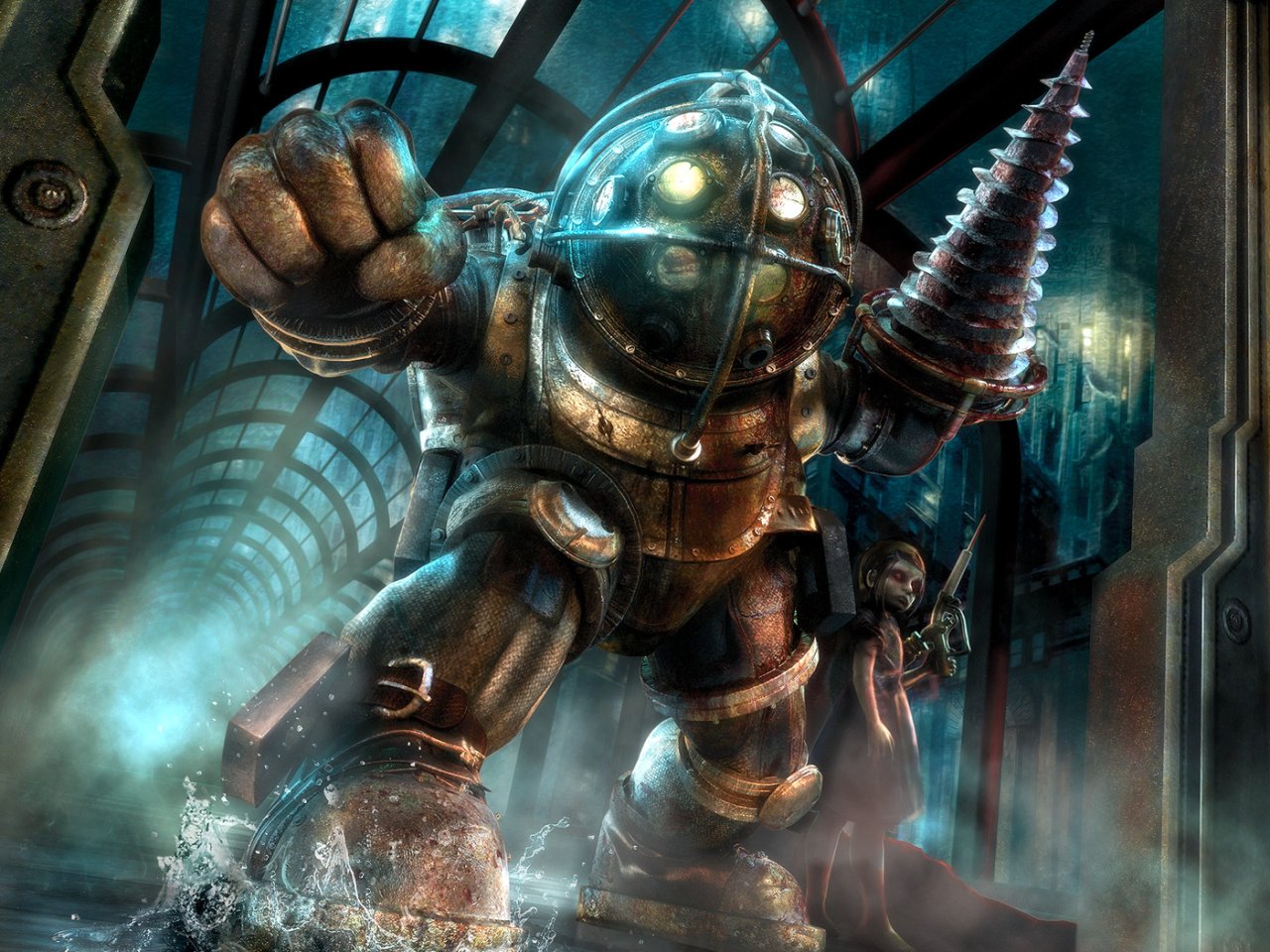
...BioShock possesses aesthetic properties... BioShock is expressive of emotions... BioShock is intellectually challenging... BioShock is formally complex and coherent... BioShock has the capacity to convey complex meanings... BioShock expresses an individual point of view... BioShock is very clearly the product of a creative imagination... BioShock gives evidence of a high degree of skill... BioShock does not however belong to an established art form...
...Finally, and this is my judgment, BioShock is the result of the intention to make an artwork. Intentions can be slippery things, but it seems evident enough in the game that it is intended to be something more than just a game: BioShock is intended to have the features listed above (they are not accidental) and it is intended to have these features as a matter of its being art.
...Are video games art? My answer is yes. But they are also a transformation of our concept of art, and as such art itself will never be the same again."After finding this article I found it impossible not to include it. Travinor makes references to other students/teachers/professors of philosophy that have commented on videogames. He actually makes the best case in giving the modern definition of art, instead of shying away from it. I found it interesting that he said it's not the ambiguous, convoluted debate we might all think it is. Rather, he says, there are some generally agreed upon definitions within the philosophy realm.
He gets into that in the article, but it was too long to include here. Please visit the original though, as I found it a very, very good read.
As you can read above, Travinor goes on to use BioShock as an example of how games can meet a lot of the criteria generally used these days to determine art status.
And again, we find ourselves at the conclusion that we have seen before:
Games have artistic characteristics, they meet most of the criteria; but the interactivity and competitive nature (involving rules, goals, etc..) of games are not typical of art. Is it enough to disqualify games from the discussion? Well, they haven't yet. Can art not be art in some ways, and less in others? Does art have to contain all the characteristics and criteria to be considered art? The answer is no. Because that's rarely true of contemporary art.
My conclusion? Well, all of these quotes have said it better than I can myself, and might as well have done the job for me already. But, It seems I believe games are art. However, it also seems we need to broaden our horizons. Let me say this again...
 |
There, I said it. Now, I move on...