
My last post ended saying I would go over Roger Ebert's contribution to the debate. Which I will. Just not right now. Because of the length of Ebert's comments, and the number of comments left on his post. It takes a while for my work computer to even pull up the post. In fact, my machine has crashed more than once while trying to view the page. So, I'll hold off on it. Also, it will take a lot more time to cover everything he said, and provide thoughtful remarks in response. Finally, Ebert's comments are easily the most talked about in the great debate, and so they lead to much more.
In the meantime I wanted to briefly touch on a few things before writing that up.
---
For now, I wanted to share a couple of comments made by gaming industry notables:
For now, I wanted to share a couple of comments made by gaming industry notables:
"Remove the beret from your head... toss your copy of Aristotle's Poetics... Crack open a two liter of Mountain Dew. Snap into a Slim Jim. Proceed to Xbox Live and shoot your best friend in the head with an M-16."
Levine's message? Forget about it. Those who don't get it don't have to. Matter of fact, you don't even have to get it. Just do what you like.
"If 100 people walk by and a single person is captivated by whatever that piece radiates, it's art... But videogames aren't trying to capture one person. A videogame should make sure that all 100 people that play that game should enjoy the service provided by that videogame... it's like a car where you have to drive it. There are 100 people driving a car; they have 100 ways of driving it and using it... so in that sense, it's totally not art."

Kojima's message? Games are like a service, not art. Games are like a car, not art.
---
So this is what I was talking about in my last post. Most of what I have read from the gaming industry side has been: don't think twice about it. Just keep mashing the trigger button like a mindless zombie (aka Just keep buying games and it doesn't really matter to us). Well, to be fair, I think Levine is really trying to side with gamers by saying "don't let the way other people think effect what you like to do".
 |
| Zombie |
On the other hand, Kojima didn't dodge the issue at all. He flat out said: it's Not. Which I appreciate and commend. Even though his opinion seems kind of silly (maybe lost a little in translation?), at least he addressed the issue directly.
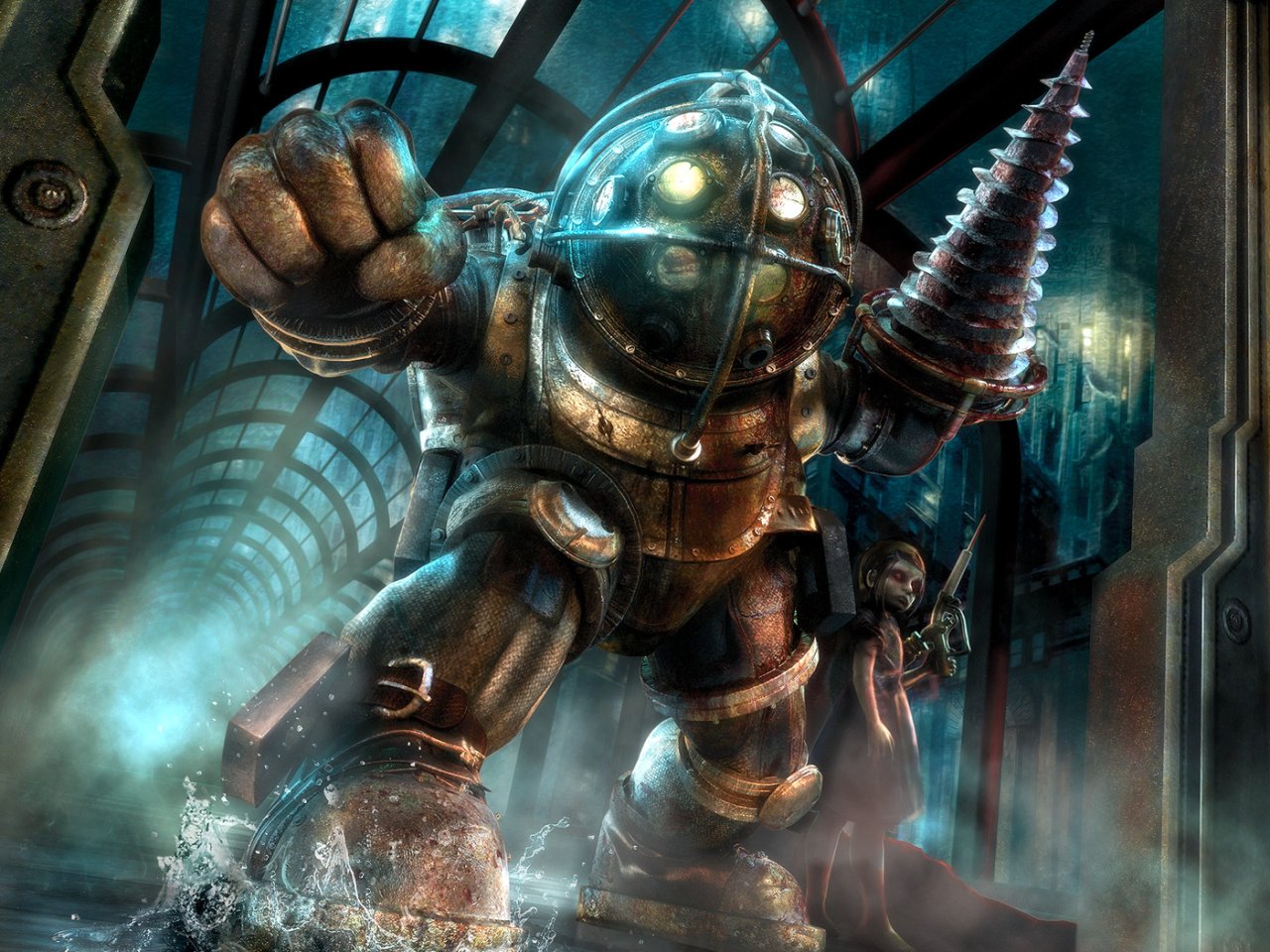
Both of these guys are considered two of the great story-tellers of the gaming world. They've created masterpieces that are comparable to stuff we see out of Hollywood. In fact, Levine's career began as a screenwriter/playwright, and it is well-documented that Kojima's love of film has had a strong influence on his work. According to Levine, BioShock was inspired by the works of Ayn Rand. The game (a far cry from the experience he describes in his quote) is intricate and suspenseful, while thought-provoking and emotional. It is a shame he chose not to defend his work more directly.
There have been strong rumors suggesting that there will be a Metal Gear Solid live action movie to be released in the near future (as you can see, gaming is starting to reach further and further into other genres).
Point is.. these guys are well-respected.
---
Point is.. these guys are well-respected.
I just wanted to share some other perspectives... More to come.
---
 So, here we go again: Who Cares? Just play games if you want, and if you don't want to, don't. Right? Why is there a need to legitimize gaming?
My answer: I consider gaming to be the great medium of "our" time. This time. This era. I believe gaming is only nearing the end of its infancy, and yet, gaming has already become a powerful way to tell stories, send messages, teach morals, learn consequences.
Much like how we appreciate art, or we immerse ourselves in movies for a couple of hours, gaming can provide us with a similar yet more powerful experience (imo).
To be honest, my personal jury (in my head) is still out for a definite answer (despite what it might sound like above). I'm merely emphasizing why I think it's important to have the discussion. Rather than fixate on- IS IT ART, OR ISN'T IT ART?
So forget all that philosophical mumbo jumbo. Why does it matter to you as a person? How will it effect you personally? I glossed over that in my last post. But here it is again:
 1) Gamers. Censorship gets it easy. How dare we cover the mouths of the great artists of our time? (at least not without taking the proper time to think about it first..)
2) Parents. Does it really numb your kids to reality? Or is it a healthy way to learn life's lessons? Does it make you shoot up your school?
3) People. Gaming is everywhere. You can't run from it. No. Really. You can't run. Just wait till this generation's children grow up... You'll see.
These are my initial reasons. I'm sure there are more. Whether or not the Answer is yea or nay, I believe if there is a debate, there's usually a reason for it. And if it's been going for this long (since the early 2000's) then it must be important. It seems the masses for the most part have given up or grown tired of the topic. Which is okay. Because that means we've exhausted the issue. Voices have been heard. Things have been considered.
 |
| really? |
But consider this then: even chess, aesthetic sports (gymnastics, etc.), as an example, have been debated by philosophers of art to garner "Art" status. Unlike film, photography, literature, etc.. video games have been largely ignored. Which is why this keeps happening.


No comments:
Post a Comment